Crews could begin placing boulders along an eroding stretch of South Carlsbad Boulevard as early as the week of Sept. 14, pending an emergency coastal development permit from the California Coastal Commission.
The work will extend an existing rock revetment about 192 feet north of the bridge at Las Encinas Creek, according to The Coast News. Each boulder weighs between four and eight tons. The project is expected to take three to four weeks, according to Carlsbad City Manager Geoff Patnoe.
Motorists should expect intermittent southbound lane closures on Carlsbad Boulevard between Palomar Airport Road and Island Way during the work.
The city declared a local emergency on Sept. 9 to bypass a formal bidding process that takes four to six months. The Carlsbad City Council was scheduled to confirm the declaration at its Tuesday, Sept. 15, meeting. The emergency is the fourth the city has declared in 2026, following storm drain damage and a water main break in January and a collapsed sewer line near Agua Hedionda Lagoon in June.
Bluffs eroding to the pavement
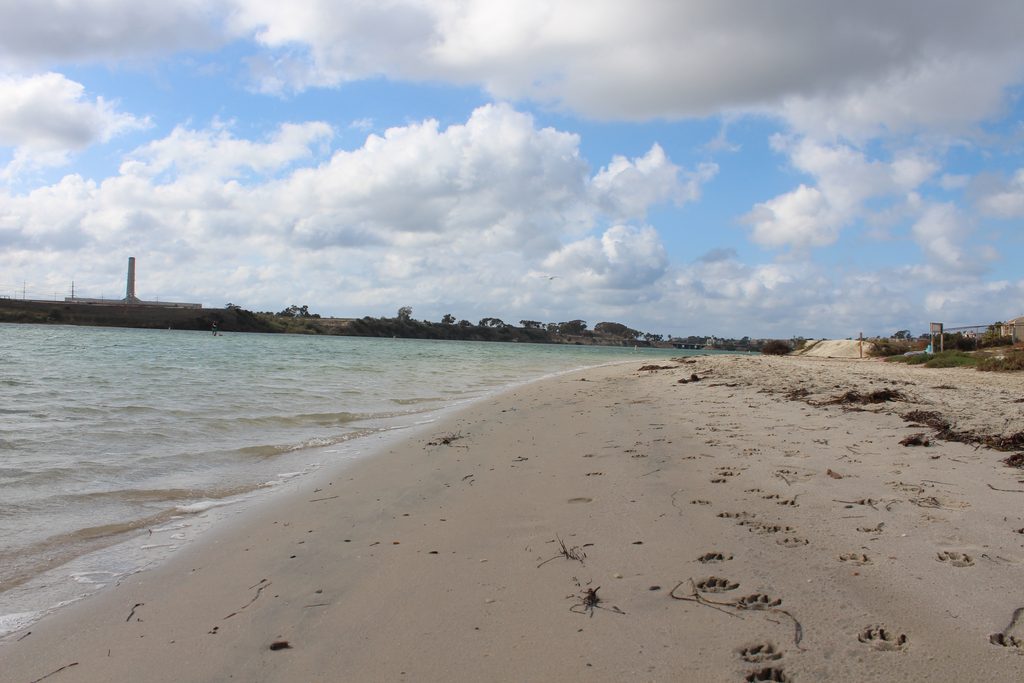
The bluffs along this stretch have eroded almost to the pavement just north of Las Encinas Creek, according to KPBS. A San Diego Union-Tribune reporter who visited the site on Thursday, Sept. 10, observed that waves had eaten away the bluff's base, leaving a steep cliff of soft earth 20 to 30 feet high on the seaward edge of the highway.
City staff first spotted cracks in the pavement shoulder and bike lane during a June 25 inspection. They placed orange cones and caution signs and sealed the cracks. In mid-July, the city hired an independent geotechnical firm to investigate. That firm's report, received Sept. 8, recommended emergency stabilization.
Mary Johnston, a longtime South Carlsbad Boulevard walker, told NBC San Diego on Sept. 10 that the road needed immediate attention. "It's going to take a long time to go through the Coastal Commission and everything they have to go through," Johnston said. "In the meantime, this road is going to cave in."
Kelvin wave could raise sea levels in October
Adding urgency is a phenomenon scientists call a "coastally trapped Kelvin wave." The wave, linked to El Niño, is moving up the coast of Mexico and could reach Southern California in early October, the Los Angeles Times reported on Monday, Sept. 14.
The wave is expected to raise sea levels off the California coast by about six inches, and its effects could last months. Dillon Amaya, an assistant professor at North Carolina State University, told the Times that elevated sea levels combined with storms can substantially increase flood risk and beach erosion.
The National Weather Service's Climate Prediction Center said in a Sept. 10 advisory that there is a greater than 90% chance of a very strong El Niño during fall and winter 2026-27.
South Carlsbad Boulevard is a popular route for cyclists, runners and walkers. The city has posted signs and orange cones warning that the cliffs are unstable.