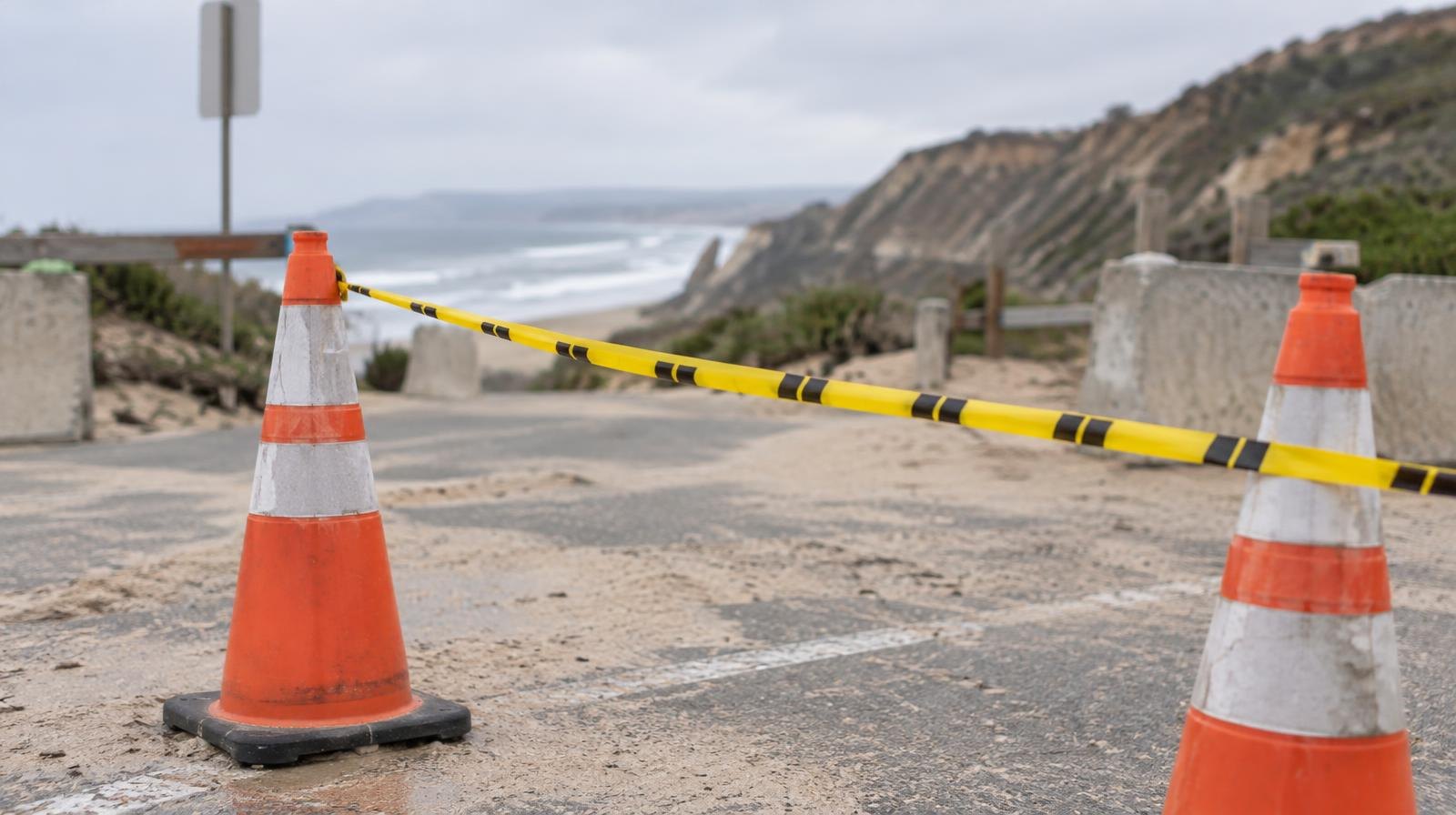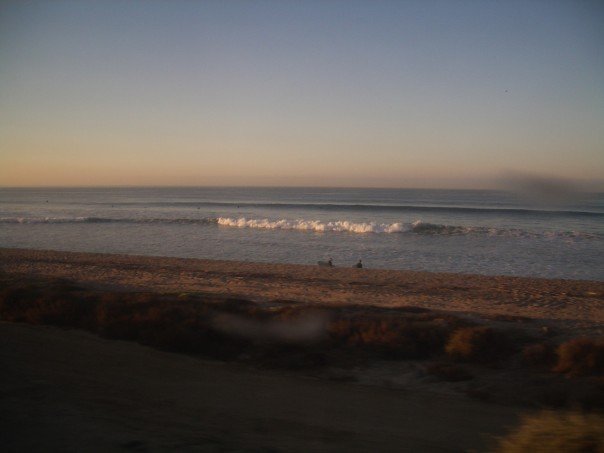
UC San Diego's Scripps Institution of Oceanography plans to survey Tamarack State Beach this week to measure how much sand the Carlsbad shoreline has lost. California State Parks is working with coastal engineers and the California Coastal Commission on a plan to reopen the closed parking lot.
State Parks shut the Tamarack parking lot on Aug. 28 after wave action destabilized the riprap boulders protecting it. Additional damage on Aug. 31 littered the lot with baseball-sized rocks, SFGate reported. No reopening date has been set.
The closure has forced visitors to park along Carlsbad Boulevard and side streets, according to NBC 7 San Diego.
State Parks said it is consulting coastal engineers on ways to reopen the lot while minimizing further damage and is coordinating with the Coastal Commission on engineering options and permit requirements, according to the San Diego Union-Tribune. No details about which options are under review or how long the permitting process might take have been released.
Why the city can't fix it
Carlsbad City Manager Geoff Patnoe said in a Sept. 3 email to the Union-Tribune that the city has no authority to lead repairs at Tamarack because it is state property.
Carlsbad has about 7 miles of coastline, but the city owns and manages only about 1 mile, from just north of Oak Avenue to the Oceanside border, according to a Sept. 3 City Manager's Update. The remaining 6 miles are owned and managed by State Parks.
"The State has not yet indicated to us (that) they view this as an emergency situation; however, we are ready to collaborate with the State should they request our assistance," Patnoe wrote in the update.
What the Scripps survey aims to find
Adam Young, a coastal process and erosion researcher at Scripps, told the Union-Tribune in a Sept. 4 email that a mid-August survey showed swells appear to have pushed sand to beaches in north Carlsbad and south Oceanside. The erosion pattern has occurred in previous summers, he said, but is much stronger this year because of higher-than-normal south swell energy.
Young said researchers believe much of the sand moved north. Some may have shifted offshore, but Scripps lacks the offshore data to confirm it. The survey planned for this week aims to fill that gap.
The bluffs near Tamarack are protected by a thick concrete seawall. The parking lot is shielded only by riprap boulders, a shorter, more permeable barrier, according to the Union-Tribune report.
A handwritten sign taped to the Tamarack seawall captured a different view. It read: "Locals that have lived and surfed here every day for 40, 50, 60 years are so glad to see Tamarack Surfing Beach return to its natural cobblestone state."
The next Carlsbad City Council meeting is Tuesday, Sept. 15, at 5 p.m. in the Council Chamber at 1200 Carlsbad Village Drive.