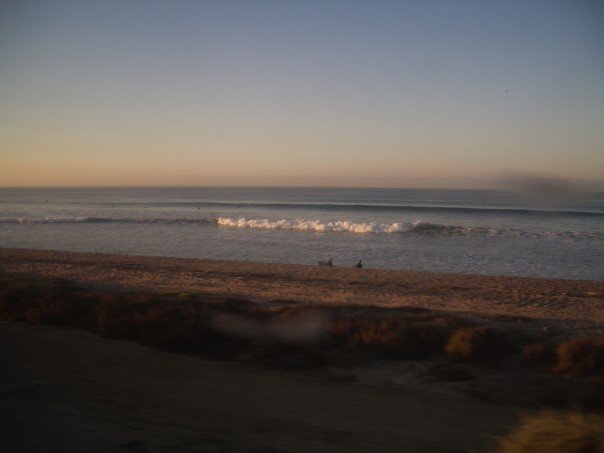
Carlsbad's City Council has not revisited its 2022 resolution opposing hard coastal structures on Oceanside's shoreline, even as the neighboring city's redesigned Re:Beach sand-retention project wins over other regional skeptics and expands its baseline studies south to Tamarack Avenue beach.
Oceanside Coastal Program Manager Jayme Timberlake presented an update on the project to Carlsbad's Environmental Sustainability Commission in August, showing data that sand stripped from Tamarack by powerful swells traveled more than a mile north, accumulating near Beech Street behind the Army and Navy Academy buildings.
"We don't know what the recourse could be if things don't go well," commission member Lawrence Rothman said during the presentation, according to the San Diego Union-Tribune.
What Re:Beach looks like now
The project has changed significantly since Carlsbad's council voted to oppose it. Oceanside scrapped the long rock groins that alarmed coastal neighbors and replaced them with two short, landscaped headlands at the ends of Tyson Street and Wisconsin Avenue. The other components: a butterfly-shaped artificial reef roughly 900 feet long, positioned 900 feet offshore, and up to 900,000 cubic yards of dredged sand placed between the headlands.
A 1:35 scale model of the reef was tested in more than 1,000 wave simulations at Oregon State University's wave research laboratory between January and March 2026.
Construction costs remain estimated at $50 million or more. Oceanside has spent more than $1 million of its own funds and received a 2024 California Coastal Commission grant exceeding $1.8 million for three years of baseline studies. Final engineering is expected to continue through 2027, with construction potentially starting in 2028.
Sand moving north surprises researchers
The baseline studies now stretch from Oceanside Harbor south to Carlsbad's Tamarack Avenue beach. Timberlake told the commission that recent observations challenge the long-held assumption that Southern California sand migrates only southward. Slow summer swells and seasonal conditions sometimes push sediment north.
"If anyone has recently been to Tamarack beach, they've seen that the sand has left in a very dramatic fashion," Timberlake told the commission. "It's actually filled in areas to the north which haven't seen sand in a few years."
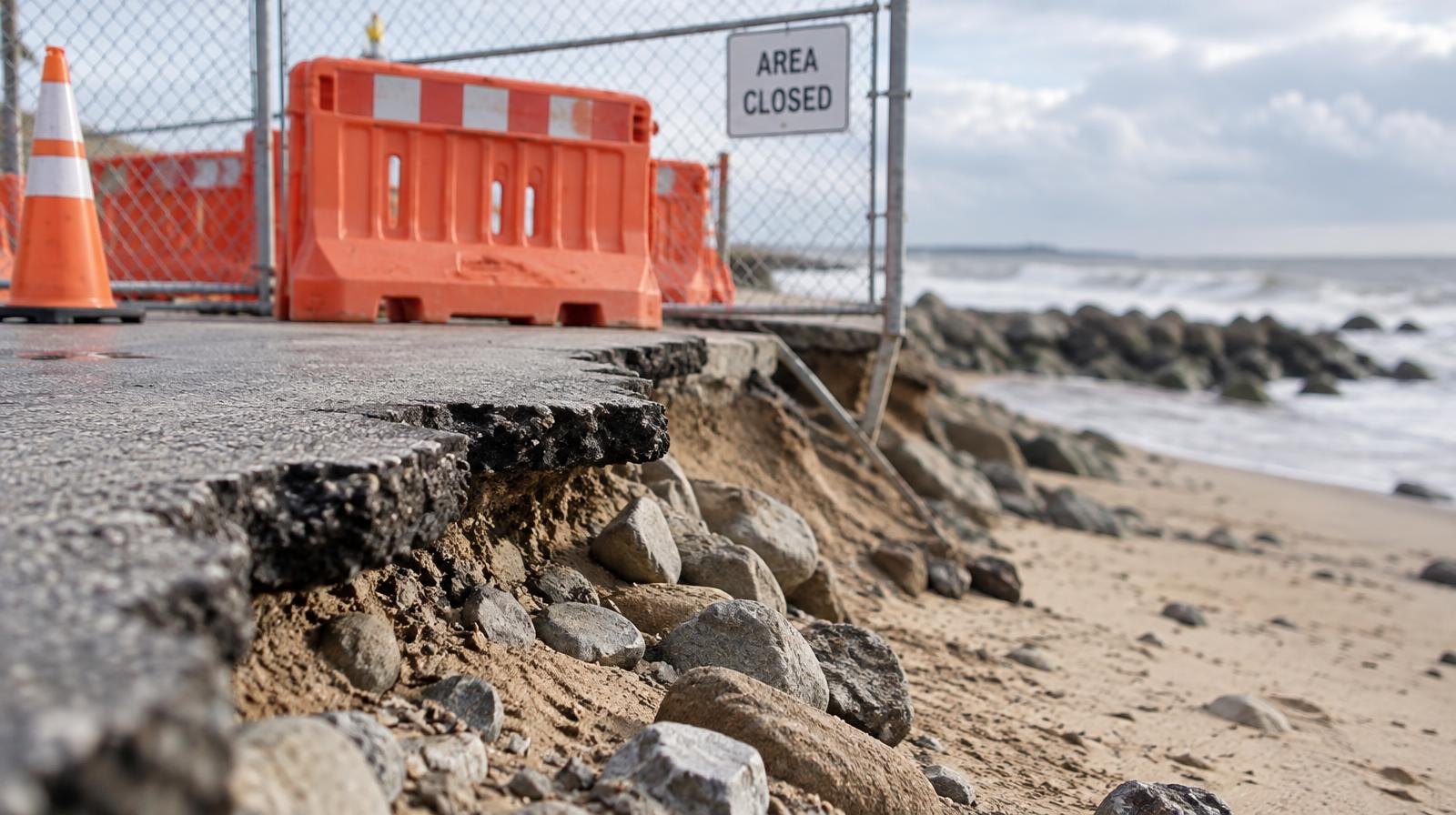
Tamarack received 400,000 cubic yards of sand from Agua Hedionda Lagoon in a February 2025 nourishment project. That sand was largely stripped away in early August by swells generated by Hurricane Genevieve, according to reporting by Secret Los Angeles, forcing officials to close at least 35 parking spaces and relocate lifeguard towers.
Regional support grows, but Carlsbad holds back
Since the redesign, most neighboring cities have softened their opposition. SANDAG announced support for Re:Beach in 2025, calling it a potential regional model. The California Coastal Commission, which for years opposed sand-retention structures, has also been receptive. Oceanside has assured neighbors that all structures could be removed if the pilot fails.
Carlsbad's formal position has not changed. The council has not publicly revisited its 2022 resolution, and no current council member has commented on the redesign.
Lance Schulte, a Carlsbad resident and former city planner, told the commission that "managed retreat" would be cheaper than building structures the ocean will eventually overwhelm. He argued the city should consider buying shoreline houses and moving them inland rather than spending taxpayer dollars on sand that will wash away.
"All this is going to be taxpayer dollars," Schulte said. "We need to consider the financial aspects of these things."
What's next
The project is roughly 65% through its design and testing phase. After completion, Oceanside will need permits from the U.S. Army Corps of Engineers, the California Coastal Commission and the Regional Water Quality Control Board, a process that could take up to 18 months. No date has been announced for the Carlsbad Environmental Sustainability Commission to make a formal recommendation to the City Council.